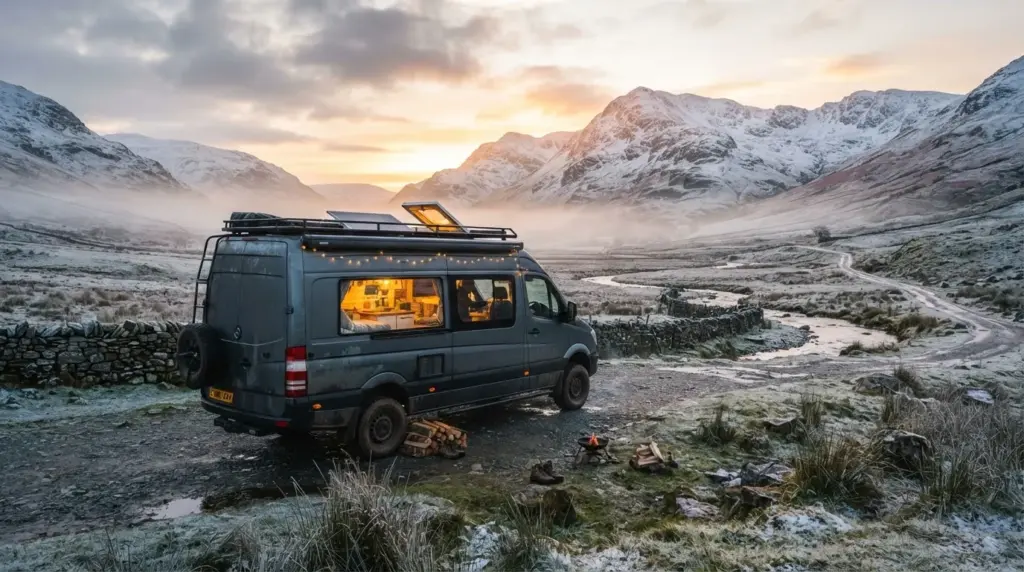
Plenty of people put their vans away when the clocks go back. Plenty of others carry on through the winter, and some say it is their favourite season: quiet roads, empty beaches, frosty sunrises and campsites to yourself. But winter in a van takes more planning. Days are short, nights are long and cold, and condensation, frozen pipes and flat batteries become real problems.
Here is how to get your van and yourself ready.
Heating, safely
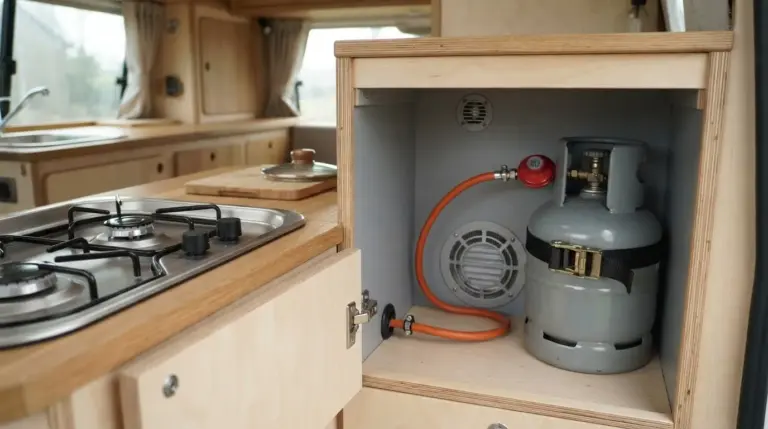
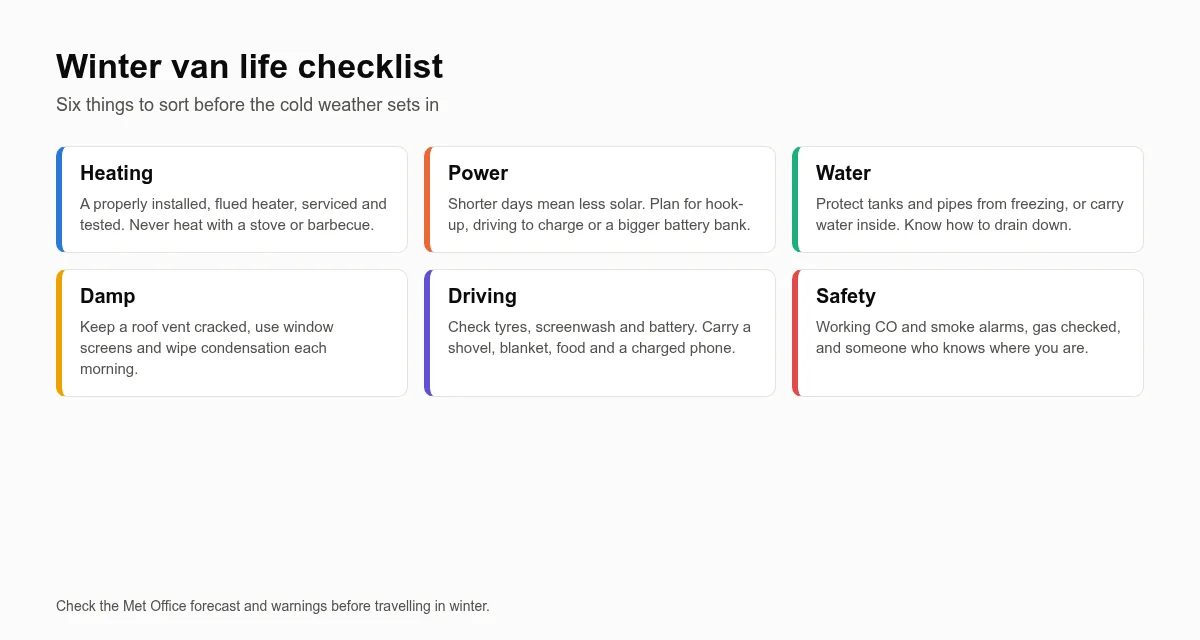
A reliable heater is the single biggest difference between a miserable winter and a cosy one. Most people use a diesel or gas heater with a sealed combustion chamber and a flue to the outside, or electric heating when on hook-up. Whatever you use:
- Have it installed properly and serviced as the manufacturer recommends.
- Fit and test a carbon monoxide alarm and a smoke alarm.
- Never heat the van with a camping stove, an oven left on or a barbecue. People die from carbon monoxide poisoning this way. Learn the symptoms from the NHS guide to carbon monoxide poisoning.
- Keep fixed safety vents clear, however draughty they feel.
Good insulation and thermal window screens mean your heater has less work to do. A warm sleeping bag or duvet and layers of clothing still make a big difference at night.
Power on short days
In winter, solar panels produce far less than in summer: the days are shorter, the sun is lower and the sky is often grey. At the same time you use more power for lights, the heater fan and charging devices. Plan for it:
- Use hook-up more often; many campsites stay open through winter.
- Charge from the engine with a split charge relay or DC-DC charger on travel days.
- Watch your battery level and avoid draining it fully. Some lithium batteries cannot be charged below freezing without built-in protection or heating, so check yours.
Our guide to campervan electrics and power budgets helps you work out how long your battery will last.
Stopping water from freezing
- Inside tanks and pipes are much less likely to freeze while the van is heated.
- Underslung tanks can freeze on cold nights. Insulated or heated tanks help; otherwise carry drinking water inside.
- Waste tanks can freeze too. Leaving the waste valve open over a container is one approach on hard-standing pitches where it is allowed.
- Know how to drain down your system, including the water heater, if you leave the van unheated in freezing weather. Frost damage to water heaters is a common and expensive repair.
Beating damp
Condensation is the constant companion of winter van life. Keep a roof vent slightly open, use window screens, cook with lids on and wipe the windows each morning. Our guide to condensation, insulation and ventilation covers this in detail.
Winter driving
- Check tyre tread and pressures. Many van owners fit all-season or winter tyres for better grip in cold, wet and icy conditions.
- Keep screenwash topped up with a winter mix, and carry a scraper and de-icer.
- Get the vehicle battery tested; cold weather is hard on weak batteries.
- Carry a winter kit: shovel, blanket, torch, food, water and a phone power bank.
- Leave more time and space, and follow the advice on driving in adverse weather in the Highway Code.
Check the Met Office forecast and weather warnings before you set off, and avoid exposed high routes in strong winds; high-sided vans are particularly affected.
Where to stay
| Option | Why it suits winter | Things to check |
|---|---|---|
| All-year campsites | Hook-up, hot showers and hard-standing pitches | Book ahead around holidays; some close for maintenance |
| Hard-standing pitches | No getting stuck in soft, wet grass | Not all sites have them |
| Pub and farm stopovers | A warm welcome and somewhere to eat | Always ask permission |
| Lower-level, sheltered spots | Less wind and less risk of being snowed in | Avoid flood-prone areas after heavy rain |
Wild camping rules do not change in winter; our guide to wild camping in the UK explains what is allowed.
Look after yourself
Long, dark evenings can feel lonely, especially if you travel solo. Plan routes with campsites or towns nearby, let someone know where you are, and make time to see people. Winter meetups and convoys are a great way to share the season. Our solo van life safety guide and first meetup guide can help.
Find winter company on VanDates
Whether you are one of the full-timers who never stops, or new to van life and trying your first winter, VanDates helps you find people heading the same way. Join for free, and find more guides on the VanDates blog.