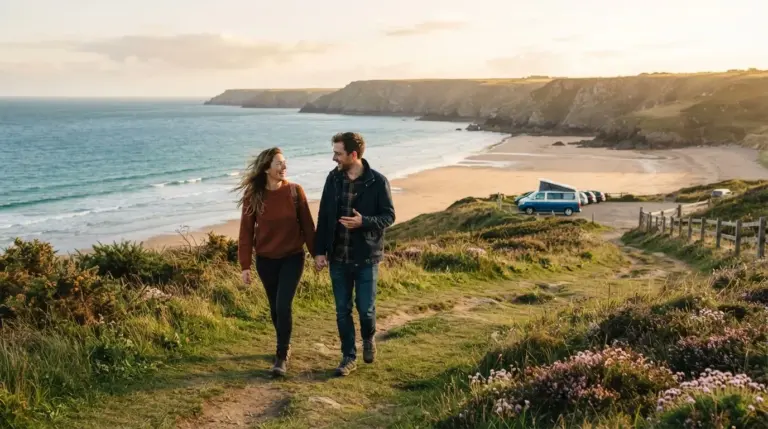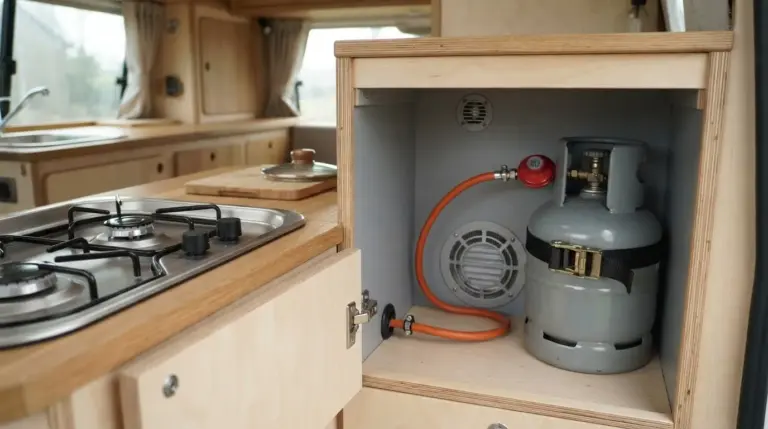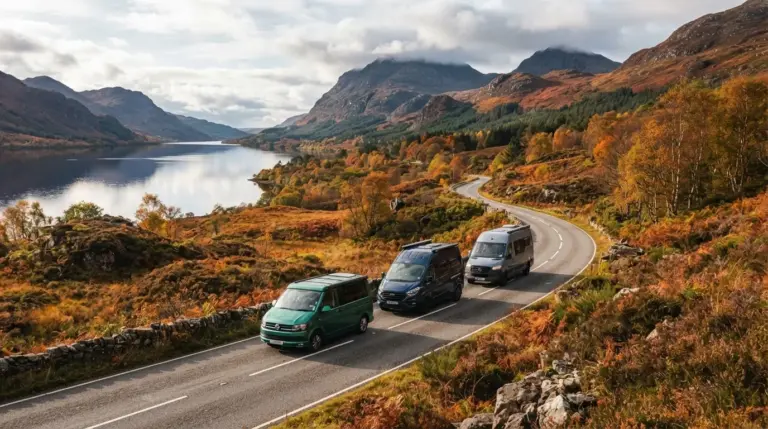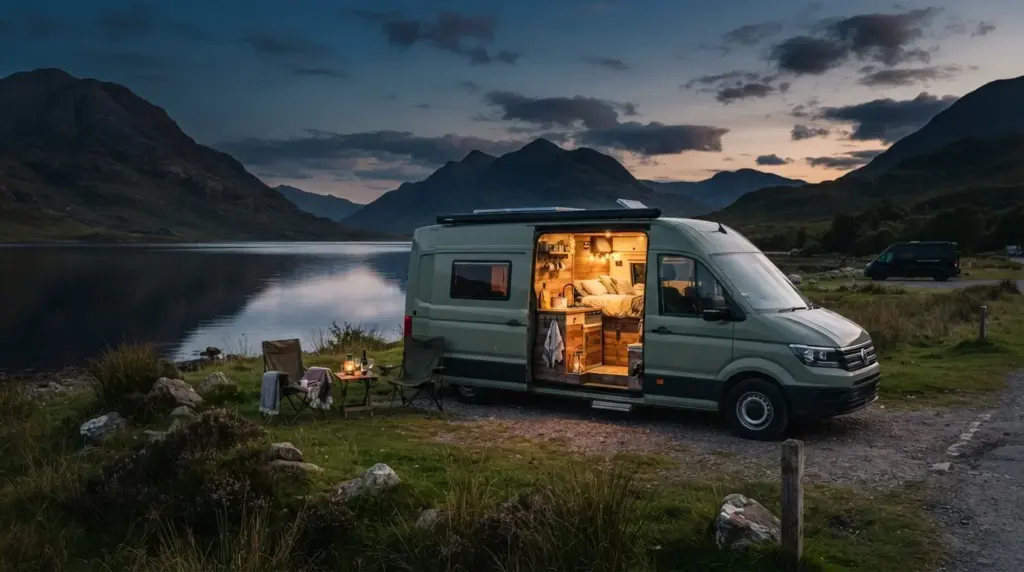
Waking up beside a loch with nobody else around is the picture that draws a lot of people into van life. The reality in the UK is more complicated than social media suggests. Rules differ between Scotland, England and Wales, and crucially, the law treats sleeping in a vehicle very differently from pitching a tent. This guide sets out the general position so you can plan trips with confidence.
This is general guidance, not legal advice. Local byelaws, car park rules and signs always take priority.
The rules at a glance
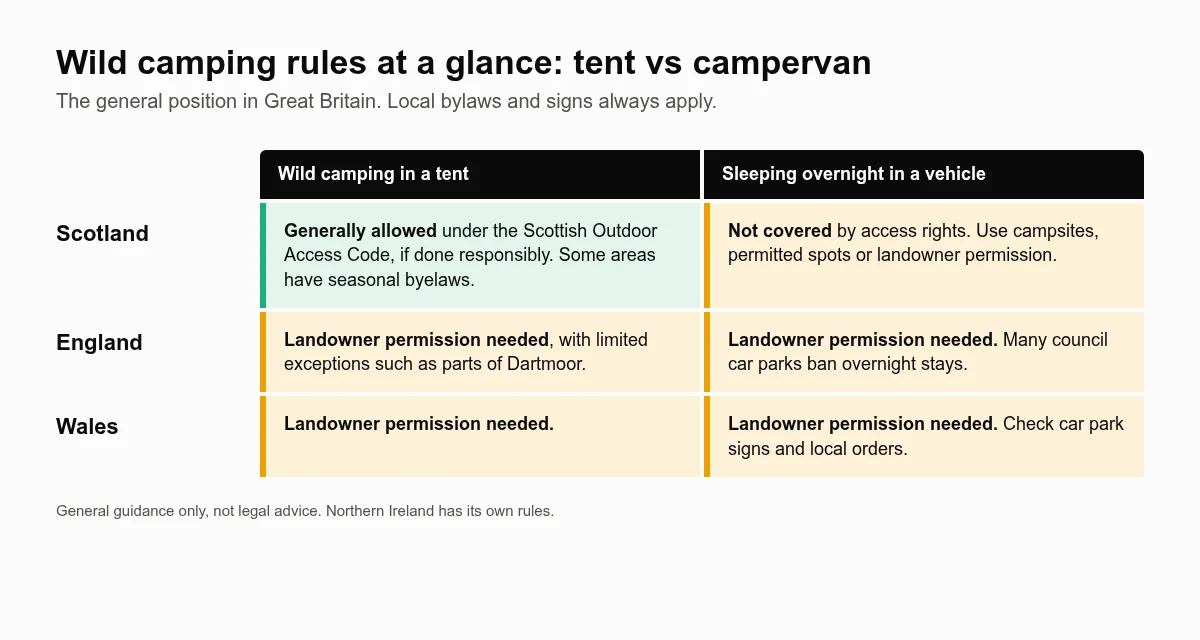
Scotland: great for tents, not a free-for-all for vans
Scotland has some of the most generous access rights in Europe. Under the Land Reform (Scotland) Act 2003, people have a right of responsible access to most land, and the Scottish Outdoor Access Code explains how to use it. That includes lightweight wild camping in a tent, done responsibly: small numbers, only for two or three nights in one place, well away from roads and buildings, and leaving no trace.
The key point for van lifers is that access rights do not cover motorised activities, so they do not give you a right to drive onto land or sleep in a vehicle there. Parking overnight on private land still needs the landowner’s permission, and many car parks and laybys, particularly on popular routes such as the North Coast 500, now have signs prohibiting overnight stays. In parts of Loch Lomond and The Trossachs National Park, seasonal camping byelaws require a permit even for tents and for sleeping in vehicles in management zones.
England and Wales: permission first
In England and Wales there is no general right to wild camp, in a tent or a vehicle. Almost all land is owned by someone, and camping without the landowner’s permission is usually trespass, which is normally a civil matter rather than a crime, but can become more serious if you refuse to leave or cause damage. Dartmoor is a well-known exception for backpack camping in tents on parts of the moor, but this does not extend to vehicles.
There is no single national law that bans sleeping in a vehicle, but many councils prohibit overnight stays in their car parks through local orders, and some areas use public spaces protection orders to deal with problem spots. Always read the signs at the entrance.
Why vans get a harder time than tents
A walker’s tent is gone by morning with barely a mark. A row of vans in a beauty-spot car park for a week, sometimes with grey water and toilet waste left behind, has led to local backlash and new restrictions in many areas. Every van that leaves a spot cleaner than it found it helps keep places open for everyone.
Legal alternatives that still feel wild
- Small certificated sites. The Camping and Caravanning Club’s Certificated Sites and the Caravan and Motorhome Club’s Certificated Locations are small, often rural sites limited to a handful of units. Most are for members only, and many are on farms with fantastic views.
- Pub and farm stopovers. Membership schemes and individual pubs, farms and vineyards let you park overnight, often free if you eat or buy something.
- Council aires and motorhome stopovers. A growing number of councils and communities offer paid overnight parking with water and waste disposal, similar to the French aire system.
- Asking permission. A polite knock at a farmhouse door, especially out of season, opens up more spots than you might expect.
- Conventional campsites, which are worth it every few days for showers, laundry, water and emptying tanks.
If you do stay somewhere informal
Where overnight parking is allowed or you have permission, follow the unwritten rules that keep places open. They echo the Countryside Code:
- Arrive late, leave early, and stay one night only.
- Park like you are just parked: no chairs, awnings, barbecues or washing lines outside.
- Never empty grey water or toilet waste anywhere except a proper disposal point.
- Take all rubbish with you, and pick up any you find.
- Keep noise down, and do not block gates, passing places or residents’ views.
- Move on politely if asked.
Staying safe and self-sufficient
Off-grid nights are easier with a van set up to look after itself: enough battery capacity to run the fridge and lights for a couple of days, fresh water, and a toilet you can empty at proper facilities. Our guide to campervan electrics for beginners explains how to size your batteries and solar. Trust your instincts: if a spot feels wrong, move on, and let someone know where you are, especially if you travel solo.
Find your people on the road
Some of the best spots are shared by word of mouth between people who look after them. If you are new to van life, connecting with experienced full-timers is the fastest way to learn where you are welcome. Join VanDates for free to meet other van lifers, and find more guides on Road Notes.