Gas makes van life comfortable: a proper hob for cooking, hot water and, for some, a heater. It is also the part of a self-build where mistakes can be fatal. Liquefied petroleum gas (LPG) is heavier than air, so a leak sinks and collects at floor level. Burning it in a small, poorly ventilated space can produce carbon monoxide.
This guide covers the safety basics every self-builder should understand. It is not a fitting guide: the clear advice is to have your gas system installed, or at least checked, by a suitably qualified engineer.
1. Use a qualified fitter
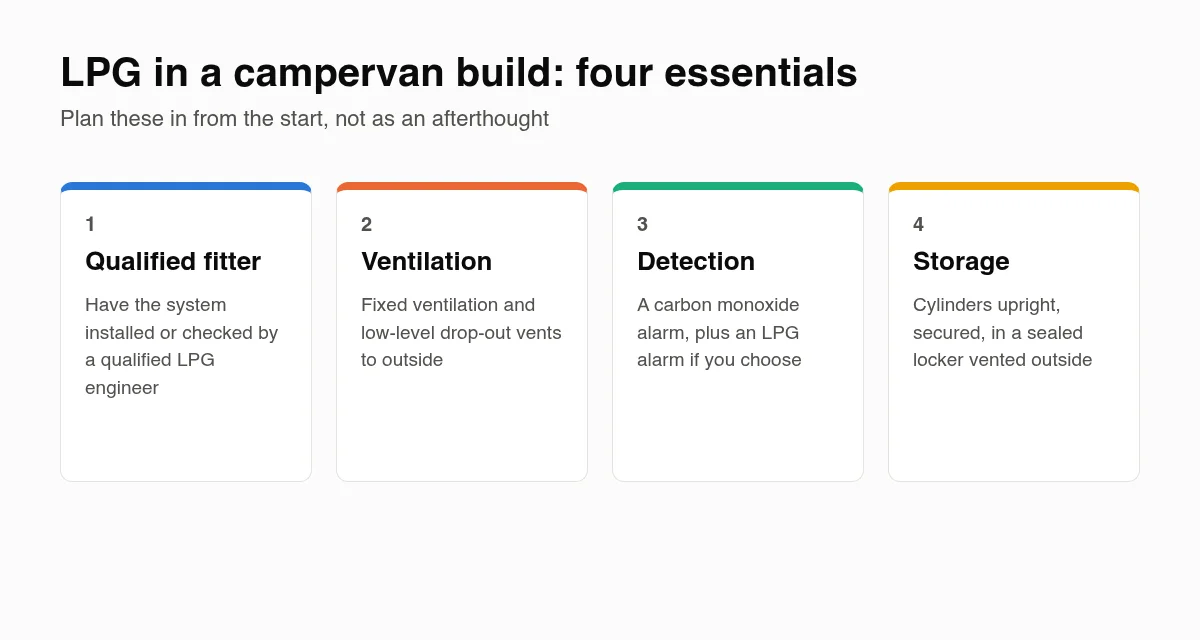
LPG work in vehicles and leisure accommodation is specialist work. Look for an engineer with the right qualifications for LPG in leisure vehicles, and ask what certificate or report they will provide. A professionally checked system protects you, and it also matters for insurance and when you come to sell the van. The Gas Safe Register lets you check an engineer’s registration and the types of work they are qualified for. HSE’s gas safety pages explain the wider rules on gas work.
Even if you plan the layout yourself, talk to your fitter early. They can tell you where the locker, vents and pipe runs need to go before you build furniture around them.
2. Ventilation and drop-out vents
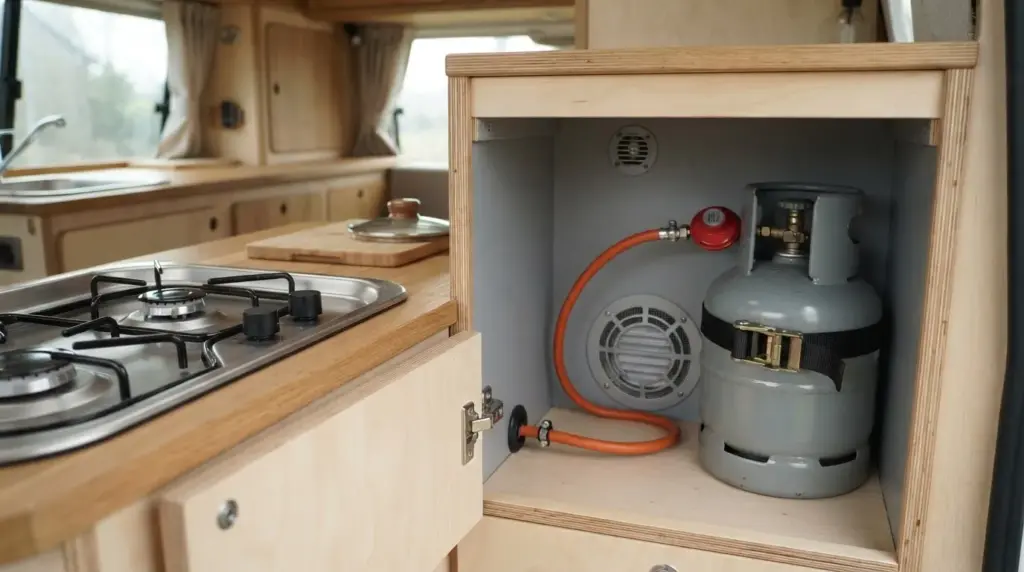
- Gas locker: cylinders should sit in a locker sealed from the living space, with a vent at the lowest point so any leaked gas drains outside.
- Drop-out vents: low-level vents in the floor or lower walls near gas appliances let heavy gas escape.
- Fixed ventilation: appliances need a supply of fresh air to burn safely. Do not block vents to stop draughts, even in winter.
- Room-sealed heaters: many vans use heaters that draw air from and vent fumes to the outside. These need correct installation of the flue.
Good ventilation also helps with condensation, as we explain in our guide to insulation and ventilation.
3. Detection: carbon monoxide and gas alarms
Fit a carbon monoxide alarm suitable for leisure vehicles in the living area, and test it regularly. CO has no smell or colour, and early symptoms such as headache, dizziness and nausea are easy to mistake for tiredness or a bug. The NHS has clear information on the symptoms of carbon monoxide poisoning and what to do. Some people also fit an LPG detector at low level as an extra layer of protection.
4. Storage: cylinders or refillable tanks
| Option | Pros | Cons |
|---|---|---|
| Exchange cylinders | Simple, widely available in the UK | Different brands use different fittings; harder to find abroad |
| Refillable cylinders | Fill at LPG pumps; often cheaper per litre | Must have the right fittings and overfill protection; filling stations vary |
| Underslung tanks | Large capacity; frees up locker space | Higher cost; professional fitting essential; adds weight |
Whatever you choose, cylinders must be stored upright and secured so they cannot move in transit. Never carry spare cylinders loose in the living area.
Everyday gas safety on the road
- Turn gas off at the cylinder when driving, unless your system is designed for use in motion, and when refuelling.
- Never use a hob or oven to heat the van, and never use a barbecue or portable gas heater inside.
- If you smell gas: turn off the supply, put out any flames, open doors and windows, do not use switches, and get everyone out. Do not use the gas again until it has been checked.
- Have the system serviced regularly, and check hoses for age and cracking.
Gas, electrics and winter
Many builders weigh gas against electric cooking and diesel heating. Our campervan electrics guide helps you work out what an all-electric setup would need. If you plan to use gas through the colder months, read our winter van life guide and van life safety tips.
Meet other self-builders
Swapping build tips with people who have done it before is one of the best parts of van life. Find others in our self-builders community, create your free profile, or browse more guides on the VanDates blog.