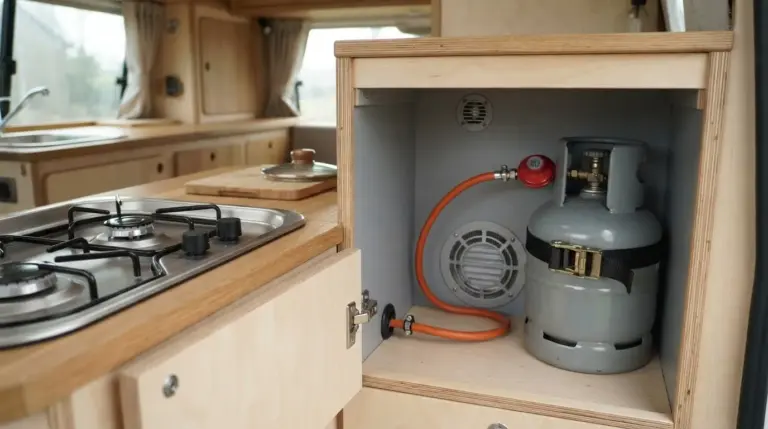
Wake up in a van on a cold morning and you will probably find water running down the windows, a damp patch on the bedding and drips from the roof. Condensation is one of the most common problems in van life, especially in a UK autumn and winter. Left unchecked, it leads to mould, musty smells and, over time, rot and rust in places you cannot see.
The good news is that it can be controlled. This guide explains why it happens and what you can do in your build and your daily routine.
Why vans get so much condensation
Air can hold a certain amount of water vapour, and warm air holds more than cold air. When warm, moist air touches a cold surface, it cools, and some of the moisture turns back into water. That surface temperature is called the dew point.
A van is the perfect place for this. It is a small space with a lot of cold metal and glass, and people add moisture constantly: by breathing, cooking, boiling kettles and drying wet clothes and dogs. A night with two people sleeping in a closed van adds a surprising amount of water to the air.
Tackle all three sides
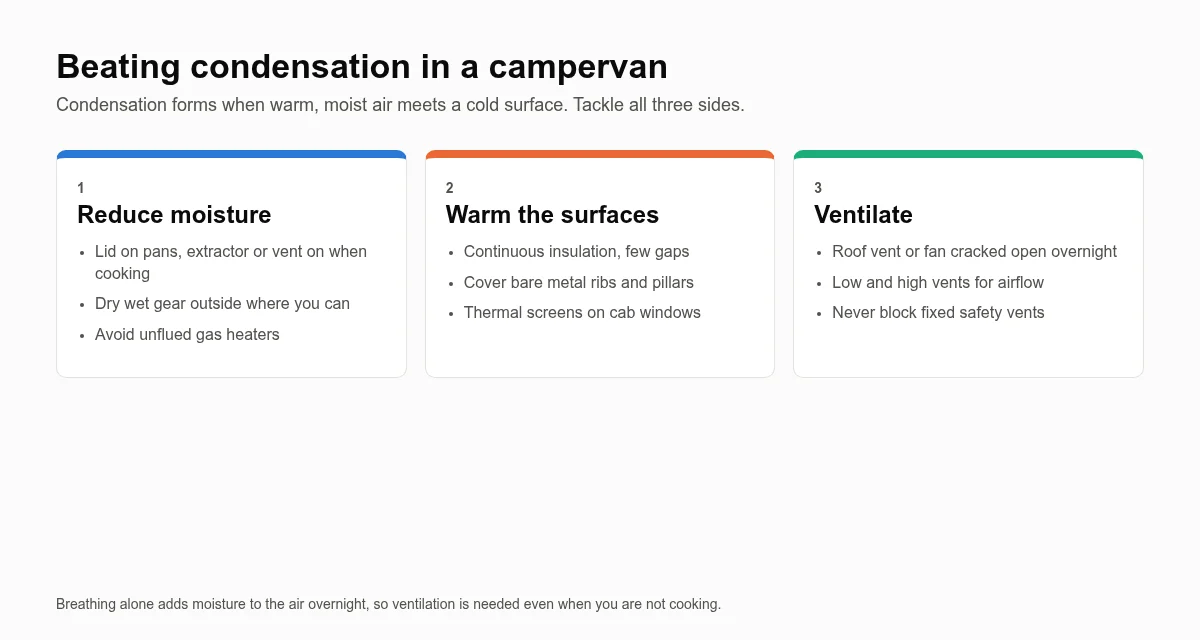
1. Reduce the moisture you add
- Cook with lids on and run the extractor or open the roof vent while cooking.
- Dry wet gear outside or under an awning when you can, not inside the van overnight.
- Choose your heater carefully. Unflued gas heaters release water vapour (and combustion gases) into the van. Diesel and gas heaters with a sealed flue to the outside, and electric heating on hook-up, add far less moisture.
- Wipe windows in the morning with a cloth or window vacuum, and wring it out outside.
- Air the bedding during the day, and lift the mattress now and then so damp does not build up underneath.
2. Keep surfaces warm with insulation
Insulation keeps the inside surfaces closer to room temperature, so less moisture condenses on them. If you are planning or upgrading a build:
- Aim for continuous coverage. Gaps and uninsulated patches become cold spots where condensation collects.
- Cover the metal ribs and pillars, not just the flat panels between them. Bare metal in contact with the inside air is a classic cold bridge.
- Think about vapour. Builders take different approaches to vapour barriers, but the aim is the same: stop warm, moist air reaching the cold outer skin behind the insulation, where it can condense unseen. Whatever approach you choose, do it carefully and consistently.
- Use thermal screens on the cab windows and windscreen. Glass is the coldest surface in the van.
- Insulate the floor as well as the walls and roof.
3. Ventilate, even when it is cold
This is the step people skip, because it feels like letting the heat out. But ventilation is the only way to get moist air out of the van. A little constant airflow works better than opening everything for five minutes.
- Leave the roof vent or fan slightly open overnight, ideally with a fan on a low extract setting.
- Pair a high vent with a low inlet, such as a slightly open window, to create a gentle flow of air.
- Keep air moving behind cupboards and under beds, where damp often collects.
Ventilation is also a safety issue
If your van has gas appliances, it should have fixed ventilation vents, usually at high and low level. These are there for safety, not comfort. Never block or tape them over, however draughty they feel. Fuel-burning appliances, and poorly maintained ones in particular, can produce carbon monoxide, which you cannot see or smell. Fit a carbon monoxide alarm, test it regularly, and learn the symptoms from the NHS guide to carbon monoxide poisoning. Gas installations should be fitted and checked by a competent engineer; you can check an engineer’s registration on the Gas Safe Register. Never use a barbecue or camping stove for heat inside the van.
Quick fixes compared
| Fix | Helps with | Things to know |
|---|---|---|
| Roof fan on low extract | Removing moist air overnight | Uses a little battery power |
| Thermal window screens | Cold glass, the worst condensation spot | Also keeps heat in and gives privacy |
| Moisture absorbers | Small, enclosed spaces like lockers | Will not keep up with a whole van on their own |
| 12V dehumidifier | Drying the air on hook-up or with plenty of power | Check its power draw against your budget |
| Window vacuum | Clearing water quickly in the morning | Treats the symptom, not the cause |
If you are adding a fan or dehumidifier, our guide to campervan electrics and power budgets will help you check your battery can cope.
Spotting a bigger problem
Some condensation on cold mornings is normal. Black mould spots, a musty smell that does not clear, soft or stained wood, or water where there should not be any may mean a leak or a build problem behind the panels. Deal with it early, because hidden damp spreads.
Swap tips with other builders
Every van is different, and some of the best advice comes from people who have already solved the same problem. VanDates connects self-builders, full-timers and people new to van life. Join for free, meet people at a van life meetup, and find more guides on the VanDates blog.