Travelling alone in a van is one of the most freeing ways to see the UK. You go where you like, stop when you want and meet people you would never have met otherwise. It also means there is nobody else to notice if something goes wrong. The good news is that a few simple habits remove most of the risk, and most solo travellers find the road far friendlier than they expected.
Here is a practical, no-scaremongering guide to staying safe on your own.
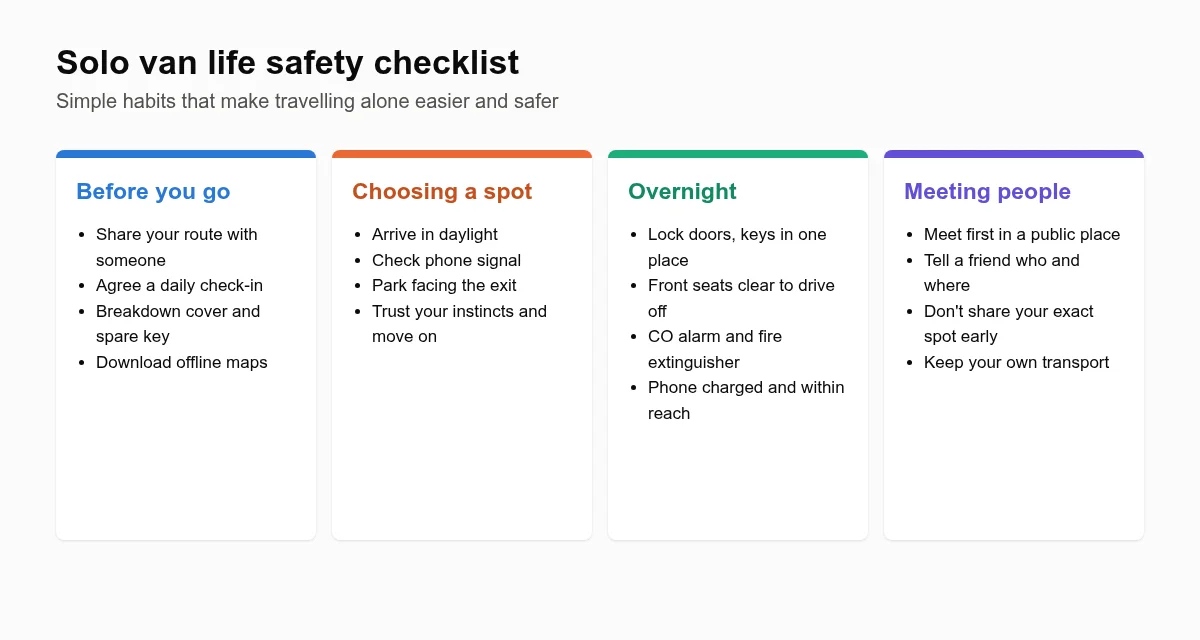
Before you set off
- Share your plans. Give a friend or family member your rough route and agree a daily check-in time. Many people share live location with one trusted person through their phone.
- Breakdown cover. Make sure your policy covers a vehicle of your van’s size and weight, and includes recovery, not just roadside repair.
- Spare key. Keep a spare somewhere secure that you can reach if you lock yourself out.
- Offline maps. Download maps for areas with poor signal, which includes much of rural Wales and the Scottish Highlands.
- Basic kit. First aid kit, torch, power bank, warm layers, water and some food you can eat without cooking.
Choosing where to stop
Where you park for the night is the single biggest factor in feeling safe. A few rules of thumb:
- Arrive in daylight so you can see the spot properly, and have a back-up option in mind.
- Check you have phone signal before settling in.
- Park facing the exit so you can drive away without reversing or manoeuvring.
- Small certificated sites, farm stopovers and campsites are a great option solo: hosts know you are there and there are usually other people around.
- Trust your instincts. If a place feels wrong for any reason, leave. You do not need to justify it.
The rules on where you can legally stay overnight vary across the UK; our guide to wild camping in a campervan explains them.
Overnight security
- Lock all doors when you are inside, and keep your keys in the same place every night so you can find them in the dark.
- Keep the driver’s seat clear so you could move to it and drive off without going outside.
- Use blackout blinds so people cannot see in, and avoid advertising that you are travelling alone.
- Keep your phone charged and within reach.
The hazards people forget: carbon monoxide and fire
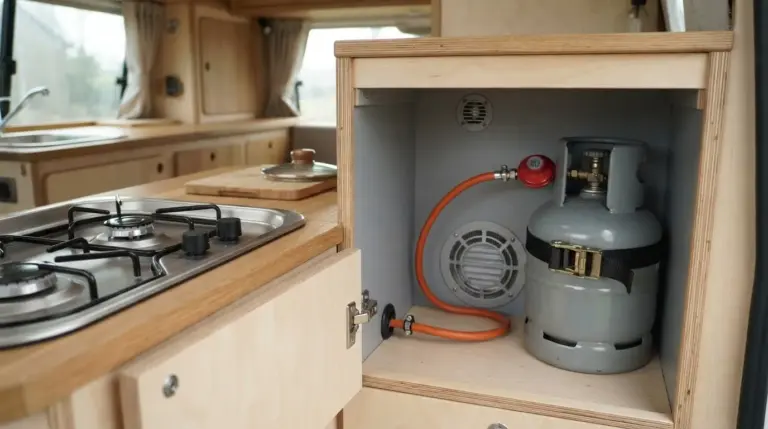
The most serious risks in a van are often not other people. Gas hobs, gas heaters and diesel heaters can all produce carbon monoxide, a gas you cannot see or smell, if they are faulty, poorly ventilated or badly installed. Fit a carbon monoxide alarm, test it regularly, never block fixed ventilation, and never use a barbecue or camping stove inside the van. Add a smoke alarm, a small fire extinguisher and a fire blanket within reach of the door, and have gas appliances serviced by a qualified engineer.
Electrical faults are another fire risk in self-built vans. If you have built your own system, our guide to campervan electrics for beginners covers fusing and cable sizing.
If something goes wrong
- In an emergency, call 999 (112 also works in the UK).
- If you are unsure of your exact location, the what3words app and your phone’s map coordinates can help emergency services find you, and many UK services accept what3words addresses.
- For urgent medical advice that is not an emergency, use NHS 111 online or call 111 (in Scotland, NHS 24 on 111; in Wales, NHS 111 Wales).
- Keep your breakdown provider’s number saved and written down somewhere other than your phone.
Meeting new people on the road
Meeting other travellers is one of the best parts of solo van life, whether that is for friendship, a convoy for a few days or something more. Sensible habits keep it enjoyable:
- Meet for the first time in a busy public place, such as a cafe or a popular campsite.
- Tell a friend who you are meeting, where and when.
- Do not share your exact overnight spot until you know someone better.
- Keep your own transport, which in van life is easy: your home comes with you.
- If someone pressures you, makes you uncomfortable or asks for money, end the conversation.
The Suzy Lamplugh Trust, a UK personal safety charity, has more practical advice on personal safety, including meeting people you have connected with online.
Look after your wellbeing too
Safety is not only about physical risks. Long stretches alone, short winter days and poor weather can wear you down. Build in regular contact with friends and family, mix remote spots with sociable campsites and towns, and connect with other people living the same way. Experienced full-timers often say the community is what keeps them on the road.
Find your people
VanDates is a community for people who live and travel on the road, including plenty of solo travellers. If you are new to van life, it is a good place to ask questions and find others heading your way. Join for free, and find more guides on Road Notes.