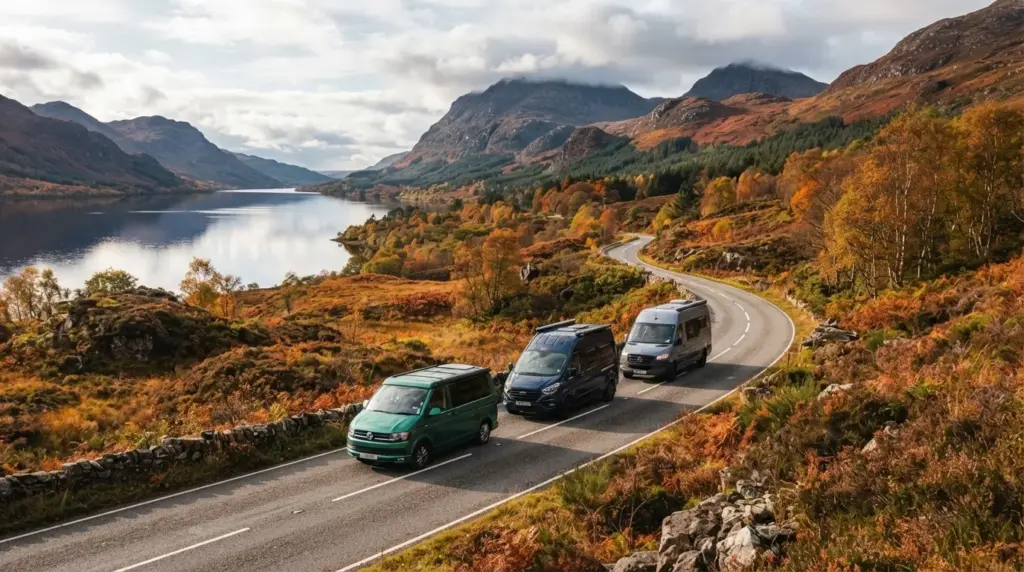
Some of the best van life memories happen in convoy: a few vans heading up the coast together, cooking on one big table at night and splitting up in the morning to explore. It is a great way to turn a meetup friendship into a proper adventure, or to try travelling with someone you met on VanDates without sharing a single small van.
Convoys work best with a little planning. Here is how to do it without losing each other, falling out or annoying everyone else on the road.
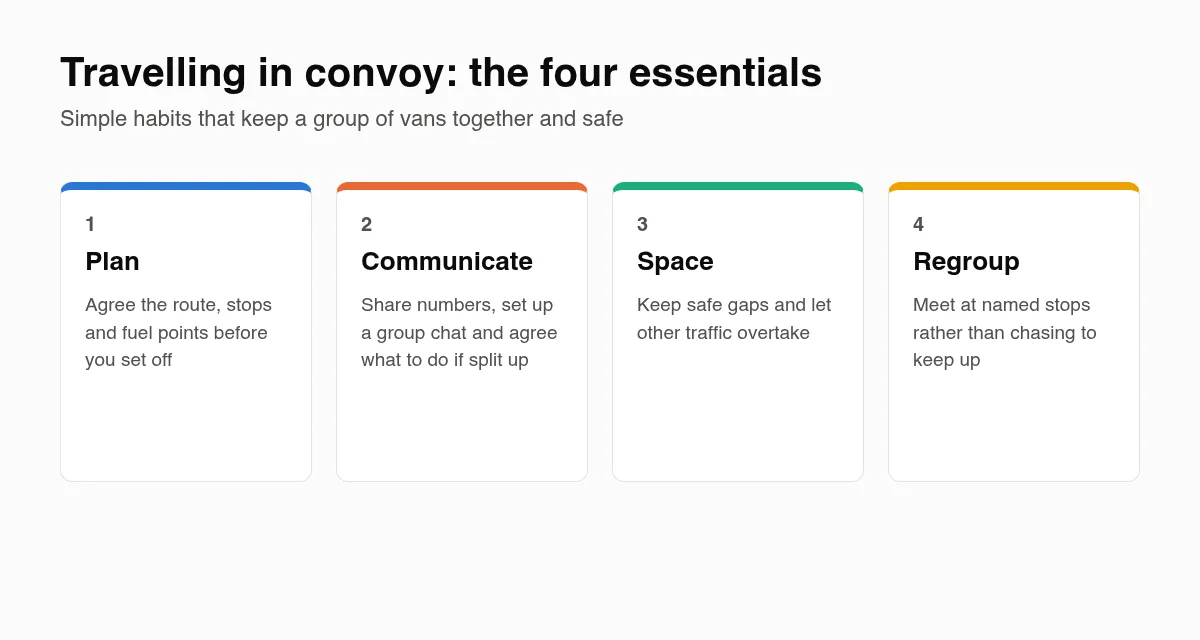
1. Plan together before you set off
- Agree the pace of the trip. Some people like to drive for hours and others prefer short hops. Talk about how far you want to go each day before you leave.
- Share the route and stops. Everyone should have the destination and planned stops in their own sat nav or app, so nobody depends on following the van in front.
- Plan fuel, water and waste. Vans have different ranges and tank sizes. Plan stops around the van that needs them most.
- Check the routes suit every van. Narrow lanes, low bridges and weight limits matter more for a large motorhome than a small camper.
2. Stay in touch
- Swap phone numbers and set up a group chat before you set off.
- Agree what happens if someone gets separated: carry on to the next named stop and wait there.
- Drivers must not use a hand-held phone while driving. Passengers can handle messages, or use hands-free and keep it short.
- Mobile coverage is patchy in rural areas. Ofcom’s mobile coverage checker helps you see where signal is likely to drop out, so you can agree regroup points before you lose contact.
3. Drive safely as a group
The biggest convoy mistake is trying to stay bumper to bumper. It is not safe and it makes life hard for other drivers.
- Keep safe gaps. The Highway Code’s rules on using the road cover stopping distances. Heavy vans need more room to stop, and more in the wet.
- Let others overtake. On long, slow roads, leave gaps between vans so other traffic can pass one at a time, and pull in where it is safe to let a queue go by.
- Do not chase. Never run a red light, speed or make a risky overtake to keep up. That is what regroup points are for.
- Put the slowest van in front. It sets a pace everyone can manage and stops the group stretching out.
4. Regroup at named stops
Choose regroup points every hour or two: a service station, a car park big enough for several vans, or a viewpoint. It takes the pressure off driving and gives everyone a break.
Parking up together
Finding space for several vans at once is harder than finding space for one. A row of vans in a car park also draws more attention, so be considerate.
| Option | Good for convoys because | Watch out for |
|---|---|---|
| Campsites | Can often book pitches next to each other | Book ahead at busy times |
| Farm stays and small sites | Quieter, often welcoming to groups | Limited pitches; check facilities |
| Aires and stopovers | Designed for overnight stays | Spaces may be limited and first come, first served |
| Meetups and events | Built for groups | Need tickets or booking |
Rules on overnight parking differ across the UK. Our guide to wild camping rules explains what is allowed, and our list of van life meetup spots is a good starting point for group-friendly places.
Heading abroad?
Convoys to Europe need extra planning for ferries, insurance and documents. GOV.UK’s drive abroad guide sets out what you need. Each driver should check their own paperwork.
Keeping the friendship intact
- Take time apart. Spending a day exploring separately and meeting up in the evening keeps things fresh.
- Talk about money. Agree how you will split shared costs like campsites, fuel for a shared trip or group meals.
- Make it easy to leave. Anyone should feel free to peel off without it being a big deal.
For more on making friends on the road, read our guides to finding community in van life and your first van life meetup.
Find your convoy crew
Looking for people to travel with? Create your free VanDates profile to meet van lifers heading your way, or browse more guides on the VanDates blog.